01
Identify Eligible Parts
Group imports by origin, HTS classification, supplier, product, and duty paid.


Monitor duty paid by country of origin, identify eligible parts, and close the supplier-certificate gap.
TariffBoost connects import history with origin, product rules, supplier evidence, and certificate coverage so the preference reaches the declaration.
Group imports by origin, HTS classification, supplier, product, and duty paid.
Connect product-specific rules with the manufacturing facts needed to support them.
Create a targeted list for missing, incomplete, or expiring FTA records.
Send approved program indicators and supporting data to brokers before duty is paid.

Prioritize eligible trade with Canada and Mexico where certificate or declaration gaps create avoidable duty.
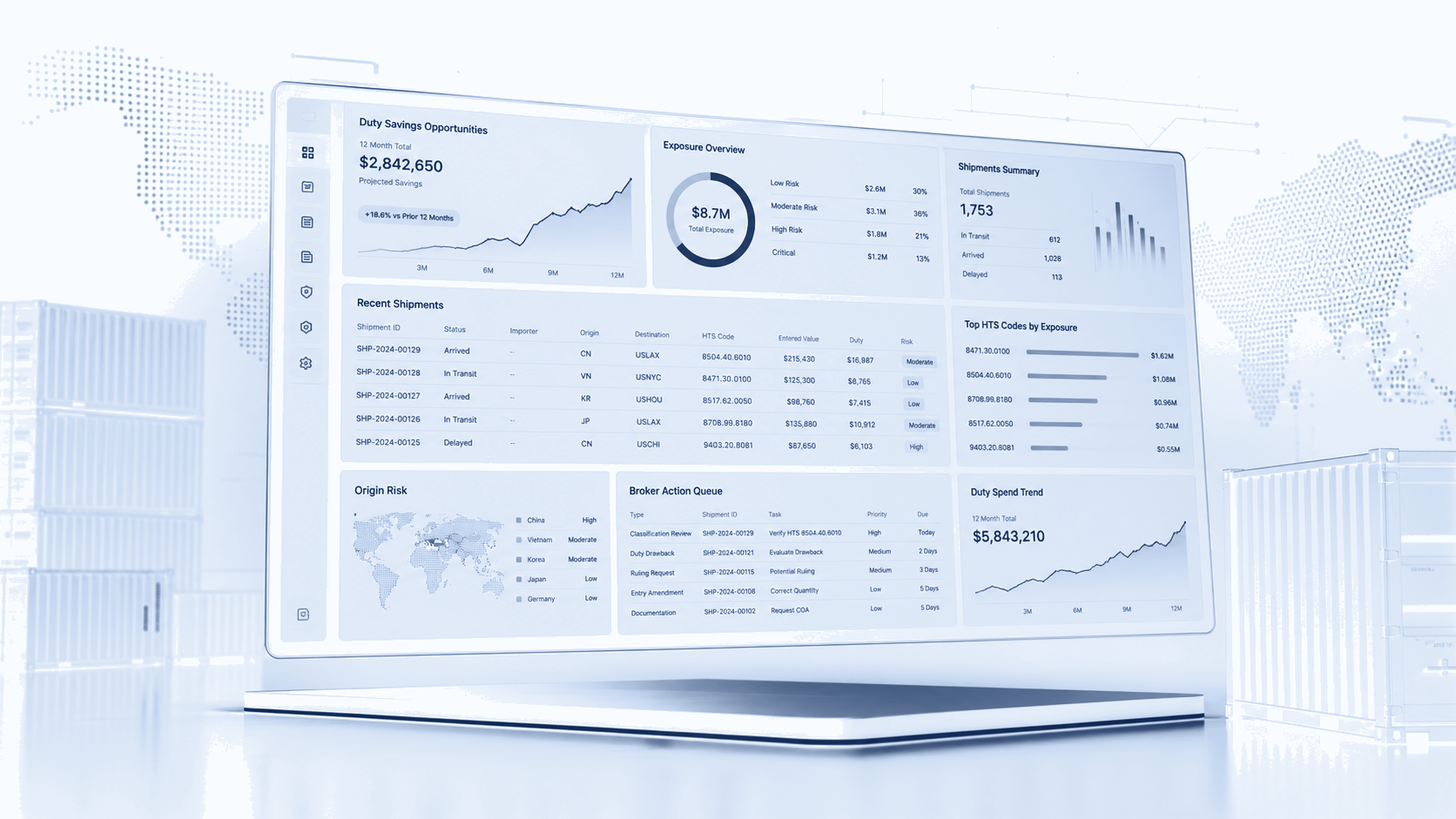
Connect South Korean origin, product rules, supplier evidence, and import history in one review.
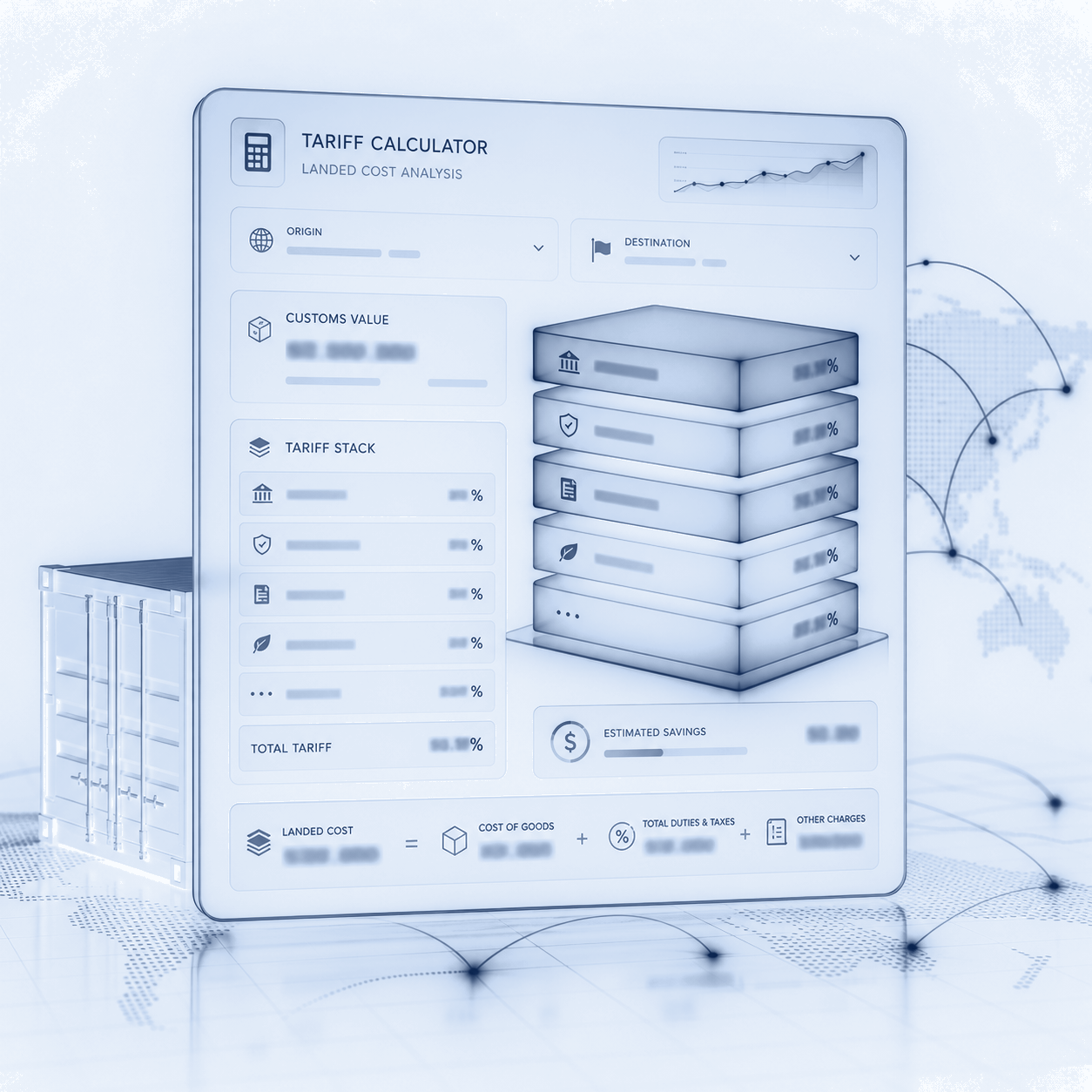
Compare duty paid with available preferences across applicable agreements, products, and suppliers.
TariffBoost connects import, supplier, and certificate data so sourcing, compliance, and broker teams can focus on the highest-value FTA opportunities.
Estimate potential FTA savings
An applicable agreement may provide a lower or free duty rate when the product satisfies its rules of origin and the importer holds the required supporting records.
TariffBoost reviews duty paid, country of origin, HTS codes, suppliers, product history, special-program indicators, and certificate coverage to prioritize potential opportunities.
No. Origin is only one part of the analysis. The product must meet the applicable agreement rule, and the importer must maintain adequate qualification and certification records.
Start with tariffs paid by origin and supplier. Build the certificate workflow around the opportunities with the strongest potential return.