01
Connect Product Records
Join product masters, broker files, entry lines, and classification history.


Compare product master data with customs declarations to expose classification mismatches and their tariff impact.
HTS classification helps determine the tariff paid on imported products. TariffBoost shows where intended, broker-used, and customs-declared codes diverge.
Join product masters, broker files, entry lines, and classification history.
Separate formatting differences from classification changes with tariff consequences.
Prioritize exceptions by value, volume, rate difference, and special tariffs.
Record approved classifications and distribute them consistently downstream.
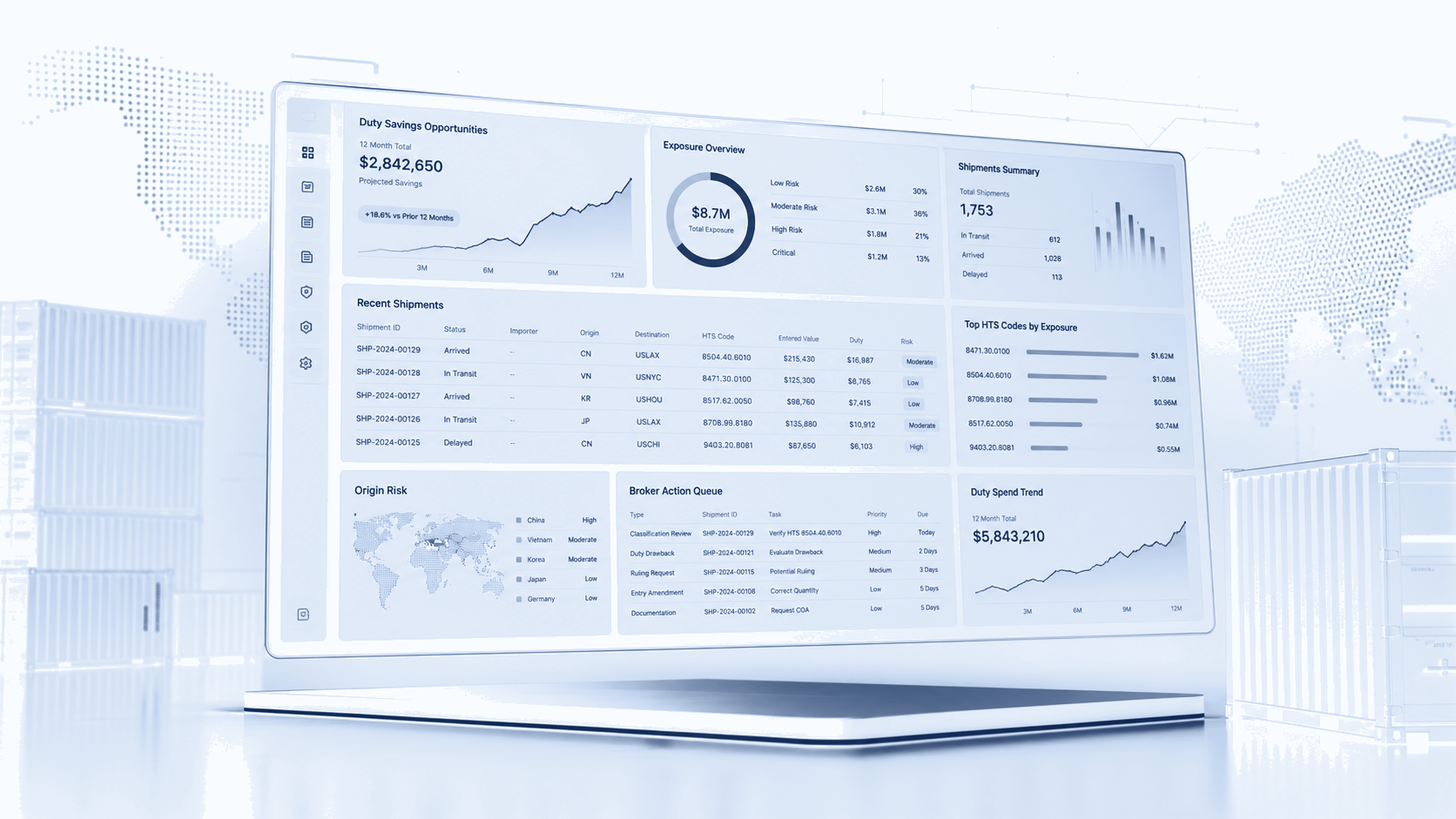
Compare importer-provided, broker-used, and customs-declared HTS codes line by line.
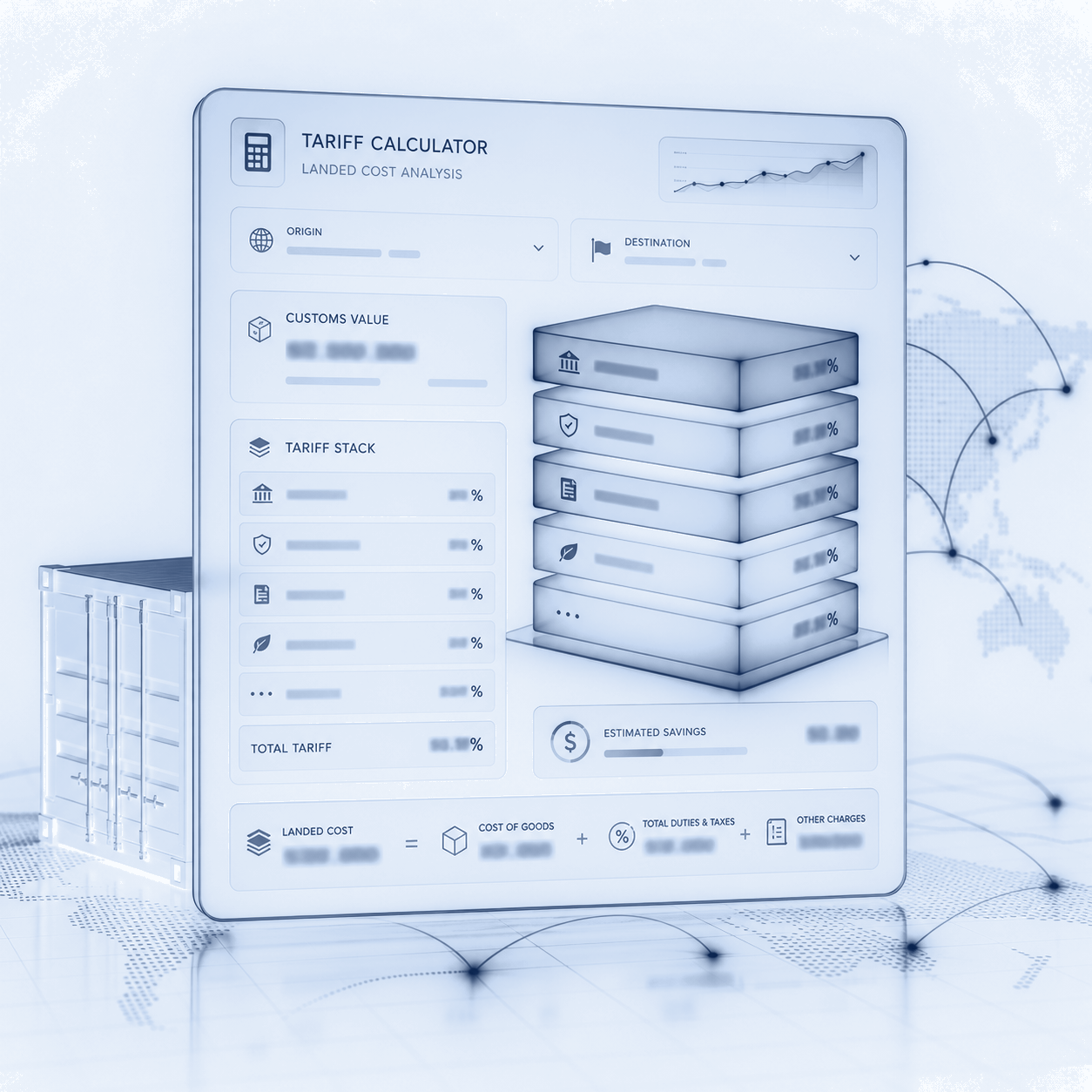
Show the duty and special-program consequences behind each material mismatch.

Move validated classifications into a traceable correction and master-data workflow.
TariffBoost shows classification variance across brokers, products, ports, and time so importers can investigate potential overpayments and compliance exposure.
Estimate duty by HTS codeIf a product was declared under an incorrect higher-duty classification, a validated correction may reduce future duty or support recovery procedures. An audit also identifies underpayment and compliance risk.
The review can compare product master classifications, broker instructions, entry-level declared HTS codes, descriptions, ruling references, and classification history.
TariffBoost identifies discrepancies and calculates their potential impact. Final classification should be determined from complete product facts and verified by appropriately qualified customs professionals.
Start with broker declarations and your product master. TariffBoost will organize the mismatch population for professional review.